Most students treat a test as a verdict. The best students treat it as a map: it shows exactly where the next week’s work should go. That idea sits at the centre of how we teach.
The four-step loop
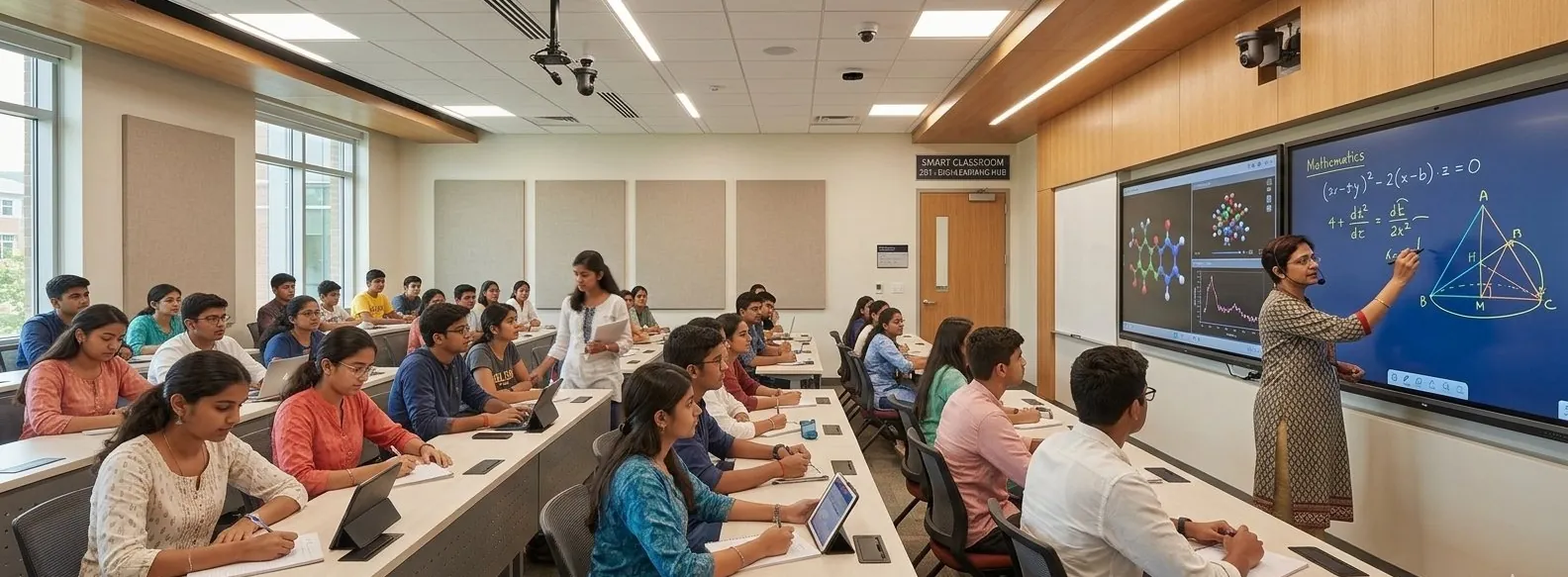
- Learn the topic — smart-class sessions with 3D simulations help students see a concept before solving a single problem.
- Practise — topic-based problems and previous years’ questions build skill step by step.
- Test as if it’s exam day — chapter tests every week, plus Sunday exams in the real exam pattern, build speed and stamina.
- Rectify every mistake — error analysis, tests on errors and a remedial programme turn lost marks into knowledge.
After every test, students should know not only the marks they scored but the reason behind the marks they lost — and how to regain them.
Our teaching approach
How to analyse a test at home
- Sort every wrong answer into one of three groups: concept not clear, calculation slip, or ran out of time.
- Re-solve each wrong question without looking at the solution, then compare.
- Keep an error notebook and revise it before the next test.
- Watch for patterns — the same type of mistake twice is a topic to revisit with a teacher.
Concept gaps need teaching, slips need practice, and time problems need timed mock tests. Treating all three the same way wastes effort.
This loop runs for every chapter in both our MPC with IIT-JEE and BiPC with NEET programmes, with mentors who track each student individually.